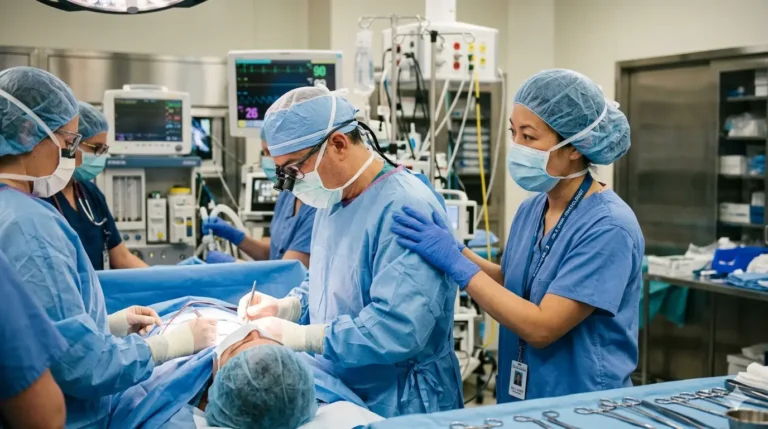

As a gynecologist, you know the “Generalist’s Grind.” Your days are a mix of routine paps, prenatal checkups, and the occasional emergency delivery. It is rewarding work, but it’s also high-stress and increasingly high-volume.
In recent years, however, the conversation in our consultation rooms has shifted. Patients are no longer just asking about infection or contraception; they are asking about intimate quality of life. They want to know why they have discomfort during exercise, why their intimacy has changed after childbirth, or how to handle the dry, thinning tissues of menopause without just “living with it.”
Transitioning from a Generalist to a Specialist in Intimate Aesthetics isn’t just about adding a few procedures to your menu. It’s a fundamental shift in how you practice medicine. Here is why making that transition is the smartest move for your career in 2026.
1. Moving from “Sickness” to “Wellness”
In general gynecology, we often wait for a problem to become “pathological” before we intervene. We wait for the prolapse to be a Grade 3 or the incontinence to be debilitating. As a Specialist in Aesthetics and Regenerative Gynecology, you operate in the preventative and restorative zone. You use science—like neocollagenesis and tissue remodeling—to treat “sub-clinical” issues before they destroy a patient’s confidence. This shift from reactive to proactive care is incredibly fulfilling for both the doctor and the patient.
2. Mastering the Tech Stack
A generalist might occasionally use a basic cautery or a standard ultrasound. A specialist, however, becomes a master of Energy-Based Devices (EBDs). Transitioning means learning the physics of Radiofrequency (RF), CO2 lasers, and High-Intensity Focused Electromagnetic (HIFEM) technology. These tools allow you to offer non-surgical solutions for vaginal laxity and SUI that have 90%+ patient satisfaction rates—results you simply cannot achieve with traditional “generalist” tools.
3. The Specialist’s Economic Edge
Let’s be honest: the insurance-based model of general practice is becoming more difficult to sustain. Specialized intimate aesthetics is largely an elective, self-pay market. By sub-specializing, you move away from the “volume game” (seeing 40 patients a day to keep the lights on) and into a “value game.” You spend more time with fewer patients, providing high-impact, high-value treatments that significantly increase your practice revenue while reducing the 2:00 AM emergency calls.
4. Credibility and the “Authority Gap”
The “Generalist” says, “I can try to help you with that.” The “Specialist” says, “Here is exactly why this is happening and the three-step regenerative plan to fix it.” Patients today are highly researched. They aren’t looking for a “jack-of-all-trades”; they are looking for the authority who has completed a dedicated fellowship and understands the delicate nuances of vulvovaginal architecture. Specializing at an institute like MIRAG bridges that authority gap, giving you the board-certified “stamp” that builds instant patient trust.
The Takeaway
The transition from Generalist to Specialist is about taking control of your professional identity. It’s about evolving with a market that is projected to hit billions of dollars by 2031 and becoming the expert that women are already out there looking for.
References & Credible Sources
- Cosmetic Gyn Board (2025-2026). Preparing for a Career Transition into Cosmetic Gynecology: Market Growth and Professional Fulfillment. [Market projections and career pathing].
- ASPS / American Society of Plastic Surgeons (2026). Plastic Surgery Trends for 2026: The shift toward regenerative sculpting and preservation.
- AMN Healthcare (2026). OB/GYN Career Insights: The demand for highly specialized sub-niches in women’s health.
- Journal of Clinical & Medical Surgery (2025). Aesthetic Gynaecology: Addressing both functional and psychosexual issues through specialized care.
- Nelson Hospital / Clinical Briefs (2026). Why Specialized Gynecologists are Important for Cosmetic Procedures: Safety and Holistic Evaluation. [Distinction between generalist and specialist safety nets].
- Liv Hospital (2026). 5 Key Benefits of Cosmetic Gynecology: Patient Satisfaction and Functional Outcomes.
- 360iResearch / Global Market Library (2026). Vaginal Rejuvenation Market Size & Share 2026-2032. [Projected growth to USD 12.26 Billion by 2026].
- ResearchGate (2025). Energy-Based Devices (EBD): Comparisons and Indications for Regenerative Gynecology. [Technical shift from generalist to specialist tools].
- Medical Global Academy (2026). Benefits of a Fellowship: Higher Income Potential and Professional Autonomy.
- MDPI – Cosmetics Journal (2025). Aesthetic Gynecology and Mental Health: Inner changes through external improvements.
- Hilaris / International Journal of ITSS (2025). Aesthetic Medicine in Gynecology: Review of methods for postpartum and menopausal changes.
- PMC / NIH (2026). Specialist vs. Generalist: Knowledge, Patterns of Care, and Clinical Outcomes. [Analysis showing superior outcomes in specialized care models].
- Medicus Healthcare Solutions (2026). 2026 Healthcare Trends: The move toward flexible, niche-based practice models for physician sustainability.
- Saba University (2026). Top In-Demand Medical Specialties: The evolution of the OB/GYN role into specialized reproductive and aesthetic health.