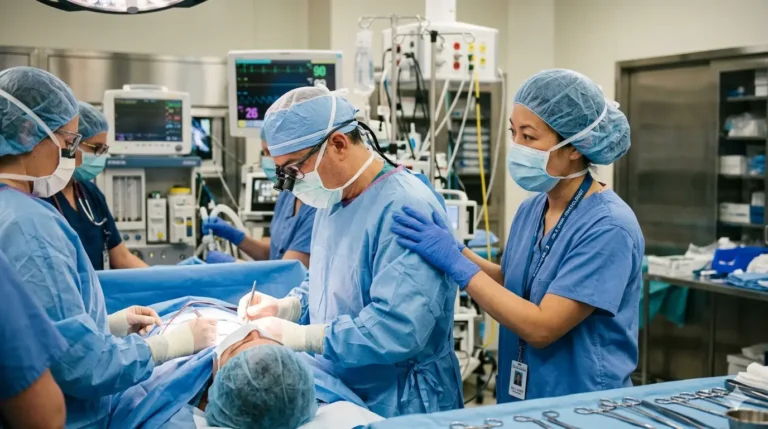


For decades, our training in OB-GYN has been – about the “life and death” stuff. We are experts at managing a crashing PPH or staging a complex malignancy. But as the years go by in a busy clinical practice, you start to notice a recurring pattern in your consultation room. Patients aren’t just coming to us because they are “sick.” They are coming because they are uncomfortable, or because their bodies no longer feel like theirs after childbirth or menopause.

We used to tell these women that “this is just part of aging.” But frankly, in 2026, that answer isn’t good enough anymore. This is why I believe—and current medical trends confirm—that a Fellowship in Cosmetic & Regenerative Gynecology has moved from being a “luxury niche” to a definitive “must-have” for the modern gynecologist.
Table of Contents
1. It’s About Function, Not Just “Vanity”
One of the biggest misconceptions in our field—even among ourselves—is that cosmetic gynecology is just about “looks.” It isn’t. When we perform a labiaplasty, the vast majority of patients are seeking relief from physical discomfort: chafing during exercise, chronic irritation, or pain during intimacy.
A fellowship gives you the surgical finesse to handle these delicate tissues in a way that standard residency simply doesn’t cover. You aren’t just “cutting”; you are restoring.
2. The Patient Demographic is Shifting—Fast
The market isn’t just growing; it’s exploding. We are looking at a global market growth reaching nearly USD 2.47 Billion by 2031. Interestingly, data shows that nearly 48% of patients seeking external genital procedures are now between the ages of 18 and 34. These are younger, well-informed women who value “Inner Wellness” and functional aesthetics. If we aren’t offering these services with a high level of expertise, they will seek out providers who do—often outside our specialty.
3. Bridging the “Gap” with Regenerative Tech
Traditional gynecology often leaves a gap between “normal” and “pathological.” A patient might not have a Grade 3 prolapse, but she has significant vaginal laxity that ruins her quality of life.
A fellowship trains you in the “in-between.” You learn to use Energy-Based Devices (EBDs) like CO2 fractional lasers and Radiofrequency (RF) for tissue remodeling and treating Stress Urinary Incontinence (SUI) without the risks of long-term hormones or major surgery. We are seeing record-breaking adoption of these technologies because they bridge the gap between surgical risks and patient desire for low-downtime solutions.
4. Practice Sustainability and Revenue
Let’s be professional about it—the economics of medicine are changing. Insurance reimbursements for traditional procedures are shrinking, and the burnout from 2:00 AM deliveries is very real. Cosmetic and regenerative procedures offer a high-value, elective revenue stream that is typically out-of-pocket. This allows you to balance your practice with scheduled, office-based procedures that have high patient satisfaction and lower “emergency” stress.
My Final Take
Joining a fellowship—like the ones we focus on at Mumbai Institute of Regenerative and Aesthetic Gynecology (MIRAG) —isn’t just about adding a certificate to your wall. It’s about not having to say “I can’t help you with that” when a patient asks about her intimate well-being. It’s about becoming a complete surgeon who understands the science of regeneration and the art of aesthetics.
In today’s competitive landscape, being “just” a gynecologist is no longer enough. To stay relevant and provide the care our patients are actually asking for, specialized training is the only way forward.
References
- Research and Markets / TechSci Research (2025-2026). Cosmetic Gynecology Market Size, Share & Forecast to 2031. [Global projections: USD 2.47 Billion; CAGR 16.07%].
- Fortune Business Insights (2026). Medical Aesthetics Market Growth, Share, and Industry Trends (2026-2034). [Energy-based devices segment growth].
- American Society of Plastic Surgeons (ASPS) (2024). 2023 Plastic Surgery Statistics Report. [Labiaplasty and body contouring growth data].
- Pheonix Research (2026). Global Medical Aesthetic Market Report 2026-2033. [Investment activity and clinic growth trends].
- PMC / PubMed (2026). Perception of aesthetic procedures applied to the vulva in the context of the medical specialty of gynecology and obstetrics. [Study on physician vs. resident knowledge and ethical perspectives].
- Straits Research (2024-2032). Vaginal Rejuvenation Market Size, Top Share, and Growth Factors. [70% market share for cosmetic-functional procedures].
- PMC / Scoping Review (2025). Application of Platelet-Rich Plasma (PRP) in Gynaecologic Disorders. [Regenerative potential in VLS and Sexual Dysfunction].
- ClinicalTrials.gov (2026). NCT06691178: Vaginal Changes After CO2 Laser (OCTRCT). [University of California, Irvine – Validation of CO2 laser for tissue thickening].
- Hilaris Publisher (2025). Regenerative Applications of Platelet-Rich Plasma in Cosmetic Gynaecology: A Systematic Review. [PRP mechanisms in neovascularization and collagen].
- Alma Lasers Global (2025-2026). Clinical Data on Pixel CO2 (FemiLift) and the Evolution of Multiplatform Aesthetic Devices.
- BTL Aesthetics (2025). Health Canada License Expansion for EMSELLA: Non-invasive treatment for somatic sexual arousal and pelvic health.