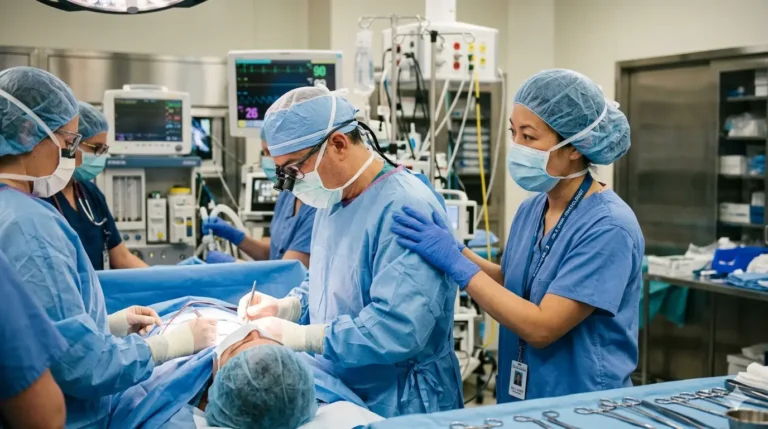


When a patient decides to undergo a procedure like labiaplasty or vaginal rejuvenation, they often face a choice: do I go to a plastic surgeon or a specialized gynecologist? To the layperson, a “plastic surgeon” sounds like the natural choice for anything “aesthetic.” But those of us in the field know that the female pelvis is not a “standard” surgical site—it is a complex, dynamic ecosystem where form and function are inseparable.

As an expert who has spent years navigating this delicate territory, I firmly believe that the gynecologist’s unique training makes them the superior choice for intimate aesthetics. Here is why.
Table of Contents
1. Mastery of the “Deep” Pelvic Anatomy
Plastic surgeons are masters of the skin and soft tissues across the whole body—from the nose to the toes. However, gynecologists live and breathe pelvic anatomy. We understand the intricate web of nerves, the specific blood supply of the pudendal artery, and the relationship between the vaginal walls and the bladder/rectum.
When we operate, we aren’t just looking at the surface “skin.” We are protecting the functional integrity of the pelvic floor. A gynecologist’s ability to recognize and preserve the deep structures is a built-in safety net that a generalist plastic surgeon simply doesn’t have.
2. The Hormonal Factor: Healing is Biological
Intimate tissues are not like the skin on your arm. They are highly responsive to hormones. A labiaplasty on a 25-year-old heals differently than one on a 55-year-old going through menopause.
Gynecologists are experts in Endocrinology. We understand how estrogen levels affect tissue elasticity, lubrication, and collagen density. Before we ever pick up a scalpel, we assess the “biological environment.” If the tissue is atrophic due to menopause, we treat that first. A plastic surgeon might see a “cosmetic” problem; a gynecologist sees a “hormonal” context. This leads to better healing and much more predictable long-term results.
3. Functional Thinking Over Pure Aesthetics
In plastic surgery, the primary goal is often the “look.” In specialized gynecology, we use a Functional-Aesthetic approach. For instance, if a woman asks for a “tightening” procedure, a gynecologist will first screen for pelvic floor dysfunction or a hidden cystocele. We won’t just “tighten” the entrance if the issue is actually a muscle tear from a previous birth. We address the root cause, ensuring the patient doesn’t just look better, but actually feels and functions better in her daily life.
4. A Holistic Relationship with Intimacy
Gynecologists are trained to handle the psychological nuances of sexual health. We are the first point of contact for issues like dyspareunia (painful sex) or sexual dysfunction. This allows us to screen for conditions like Body Dysmorphic Disorder (BDD) more effectively. We don’t just see a patient as a “procedure”; we see them as a whole person with a reproductive history, a sexual history, and future health goals.
The Bottom Line
While plastic surgeons are undeniably talented artists, the female intimate area requires more than just an “artistic eye.” It requires a deep, clinical understanding of a woman’s lifecycle. By choosing a gynecologist specialized in aesthetics—like those trained at MIRAG—patients are choosing a surgeon who treats the vagina not just as a feature, but as a vital, living organ.
References & Credible Sources
- Nelson Hospital / Clinical Insights (January 2026). Why Specialized Gynecologists Are Important for Cosmetic Procedures. [Comparison of anatomical focus and safety nets].
- PMC / National Library of Medicine (January 2026). Gynecoplastic Surgery: A Unified Terminology for Aesthetic, Reconstructive, and Functional Procedures. [On the convergence of functional science and aesthetics].
- ACOG / American College of Obstetricians and Gynecologists (2018/2024 Reaffirmed). Statement of Policy: The role of the obstetrician-gynecologist in cosmetic procedures.
- GLOWM – The Global Library of Women’s Medicine (2025). Surgical Anatomy of the Pelvis: Muscles, Nerves, and Vessels. [Essential anatomy for the gynecological surgeon].
- Cleveland Clinic / Health Library (December 2025). Vaginal Rejuvenation: Treatment, Purpose & Procedures. [On the importance of consulting a gynecologist for hormonal and medical context].
- Journal of Clinical & Medical Surgery (2025). Cosmetic Gynecology: Addressing both functional as well as aesthetic aspect.
- Wikipedia / Medical Education (March 2026 update). Gynaecology: Specialized hormone-modulating therapies and surgicalREP reputations.
- IUGA / International Urogynecological Association (2025). Cosmetic Gynecology Special Interest Group: Clinical duty and pelvic floor expertise.
- PubMed / National Institutes of Health (2024). Long-term Functional and Aesthetic Outcomes of Labiaplasty: A Review.
- MDPI – Cosmetics Journal (February 2025). Aesthetic Gynecology and Mental Health: Complex relationship between well-being and procedures.