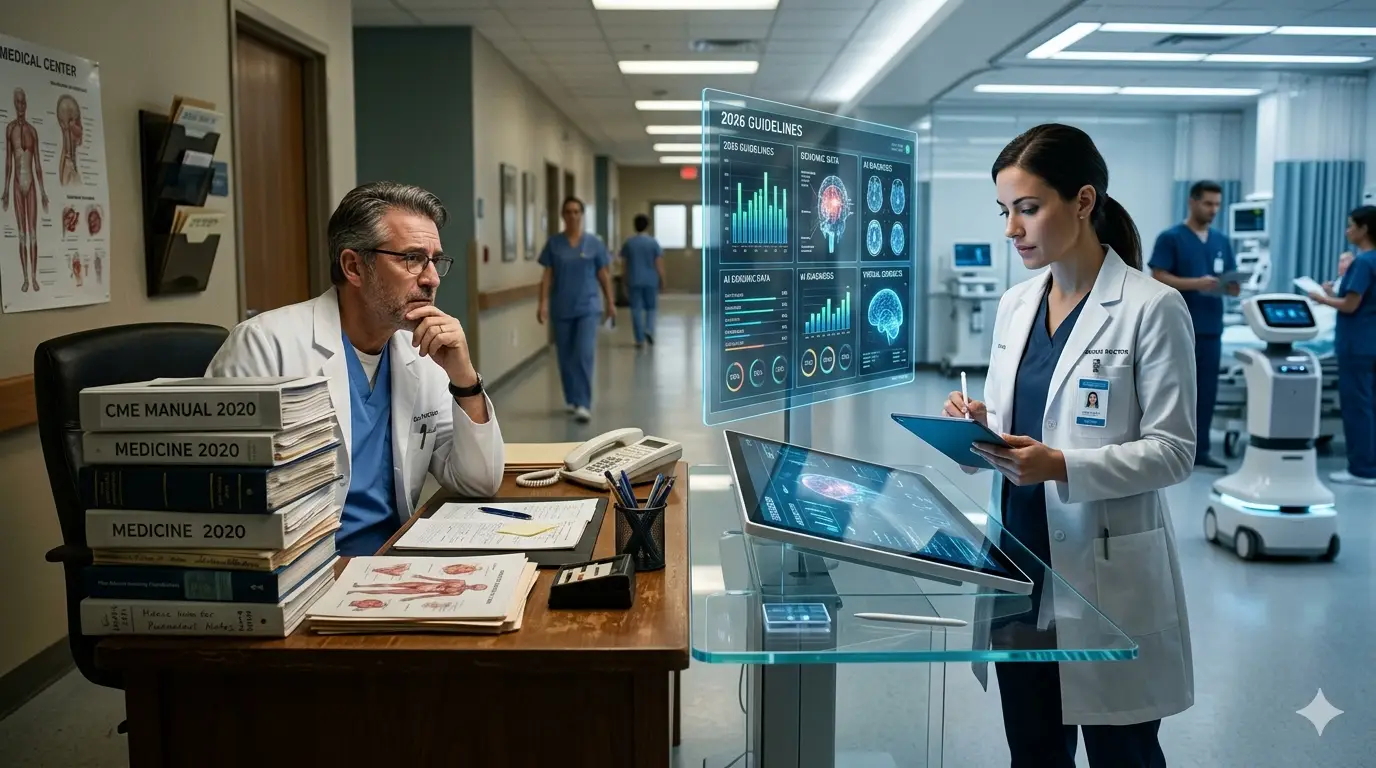

Medical knowledge has always evolved. But the pace has changed dramatically.
A decade ago, a new technique might take years to reach mainstream practice. There was time to read, reflect, and adapt gradually. That is no longer the case — especially in regenerative and aesthetic gynaecology, where the technology, the biologics, and the safety standards are all shifting simultaneously.
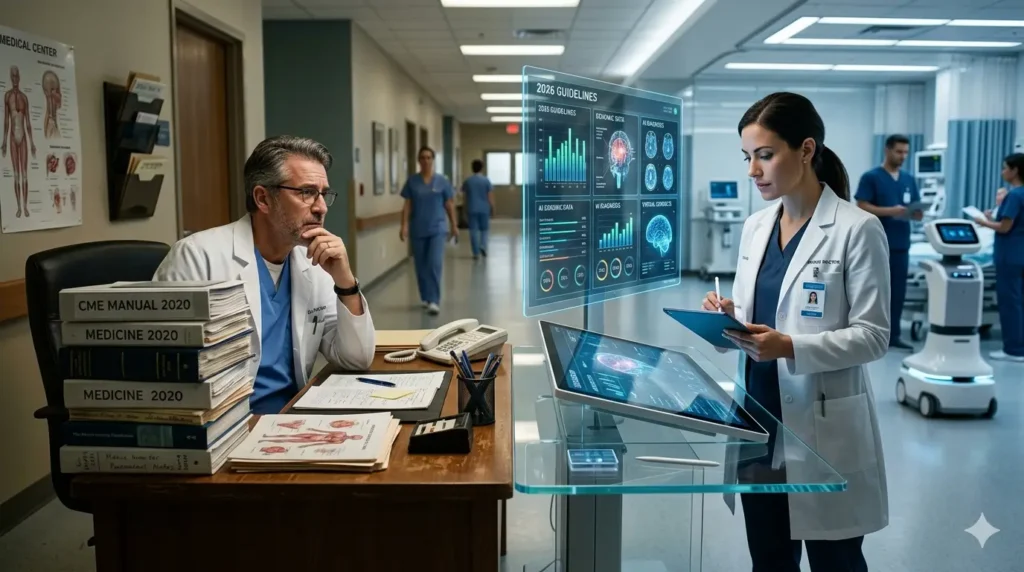
If your last structured training was two or more years ago, there is a real chance your clinical practice has already fallen behind. Here is why continuous medical education (CME) is no longer optional in this specialty.
Table of Contents
1. Energy-Based Devices Are Not What They Were Two Years Ago
Five years ago, owning a CO2 laser placed you at the leading edge of intimate health practice. Today, it is the baseline.
The current generation of devices combines radiofrequency (RF), high-intensity focused electromagnetic (HIFEM) technology, and AI-driven energy delivery that adjusts to tissue impedance in real time. These are not incremental upgrades. They require a fundamentally different understanding of biophysics to use safely and effectively.
Without current training, you cannot reliably determine whether you are over-treating or under-treating. Understanding thermal relaxation time, tissue penetration depth, and impedance feedback is not a one-time event. It requires regular recalibration.
2. Regenerative Biologics Are Evolving Monthly
The hardware is only one part of the picture. The biological tools available to aesthetic gynaecologists are changing just as fast.
The field has moved from basic platelet-rich plasma (PRP) to platelet-rich fibrin (PRF), and now towards exosomes and mesenchymal stem cell (MSC) derivatives for conditions like vaginal atrophy and lichen sclerosus.
Without current CME, you may be offering protocols that are either outdated or operating outside updated regulatory boundaries — neither of which serves your patients or your licence.
3. CME Protects You from Device Marketing
Every practice owner has been approached by a sales representative promoting a “revolutionary” new platform. Without a strong clinical education foundation, it is genuinely difficult to separate evidence-based innovation from expensive marketing.
Good CME teaches you to read the data critically. It helps you ask the right questions: What is the study design? What is the comparator? What are the adverse event rates? This protects both your patients and your capital investment.
4. The Standard of Care Is a Moving Target
In a specialty this dynamic, what constituted acceptable practice two years ago may not meet current standards today. New safety data regularly updates recommended laser settings, RF energy parameters, and post-procedure protocols.
Staying current is your strongest defence — medically, professionally, and legally.
5. The Half-Life of Medical Knowledge Is Shrinking
This is not a perception. It is a documented phenomenon.
Research highlighted by JAMA Network confirms that the half-life of medical knowledge — the point at which half of what you learned is outdated or superseded — has shortened to approximately five years in technology-driven specialties, and is shrinking further. In some procedural fields, it is already closer to two to three years.
This means that a gynaecologist who completed a fellowship in 2021 and has not engaged in structured CME since may be practising on a significantly outdated evidence base — even if they feel clinically confident.
What Good CME Looks Like in This Specialty
Not all CME is equal. In aesthetic and regenerative gynaecology, effective continuing education should include:
- Hands-on training with current device platforms, not just lecture-based modules
- Review of peer-reviewed literature, not manufacturer-provided data alone
- Updates on regulatory frameworks for biologics and regenerative therapies
- Case-based learning that addresses real complication scenarios
- Assessment components that verify clinical competency, not just attendance
The Bottom Line
CME in aesthetic gynaecology is not an administrative requirement. It is a clinical necessity.
The technology is changing. The biologics are changing. The regulatory environment is changing. The standard of care is changing. Keeping up is not optional if you want to practise safely, deliver real outcomes, and sustain a credible specialist practice.
The question is not whether you can afford the time for structured education. It is whether you can afford to practise without it.