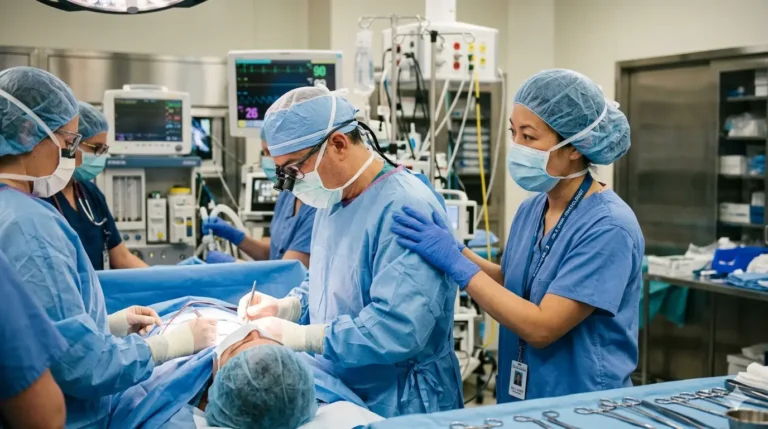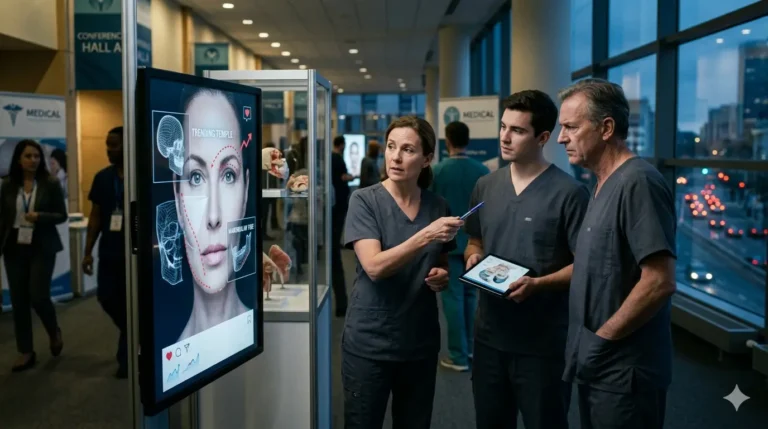
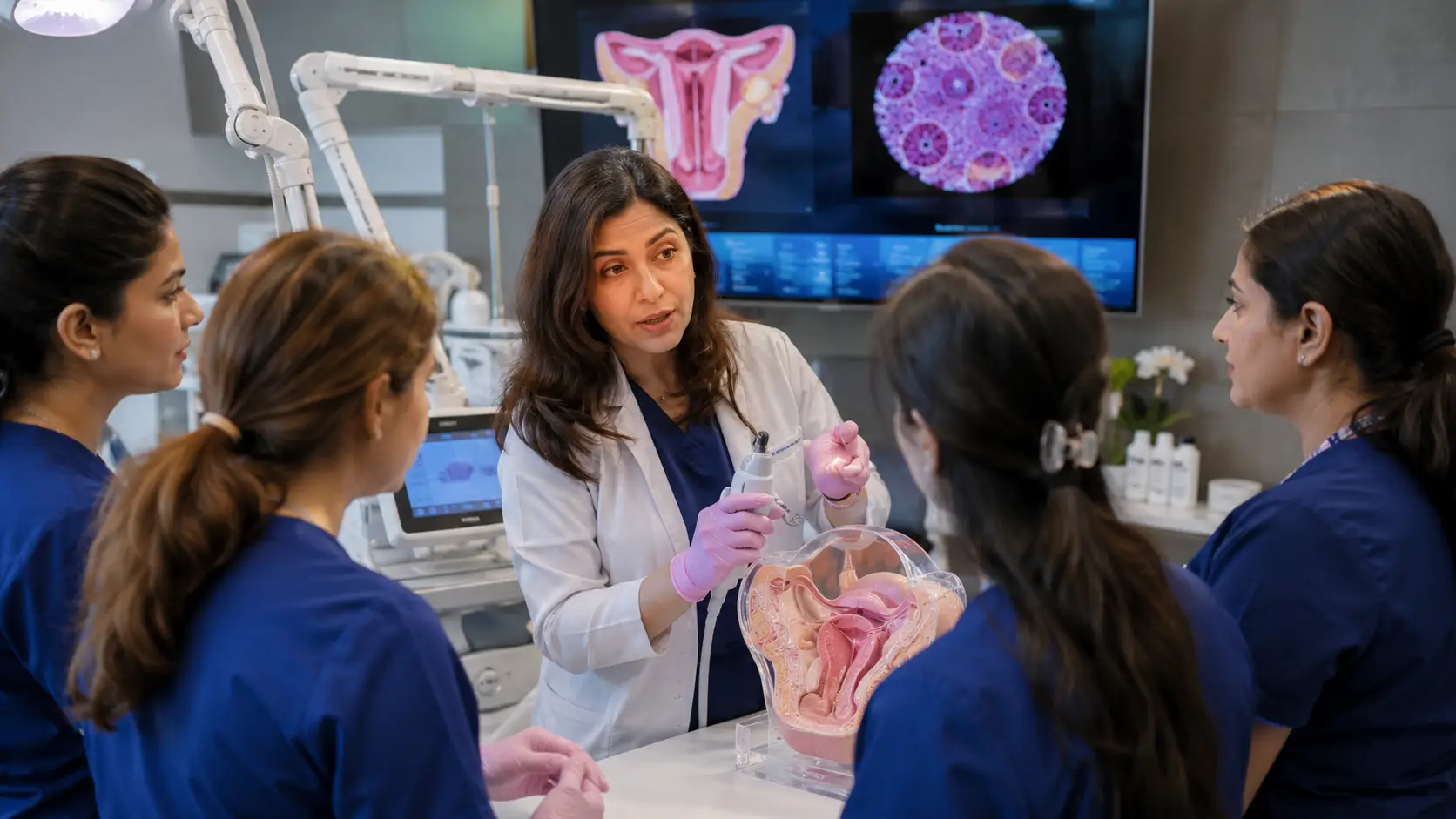

If you’ve been in a gynaecology practice for more than a few years, you know that our field is currently undergoing a “Technological Renaissance.” We are moving away from the old-school “cut and sew” approach toward a more sophisticated model of Regenerative Medicine.
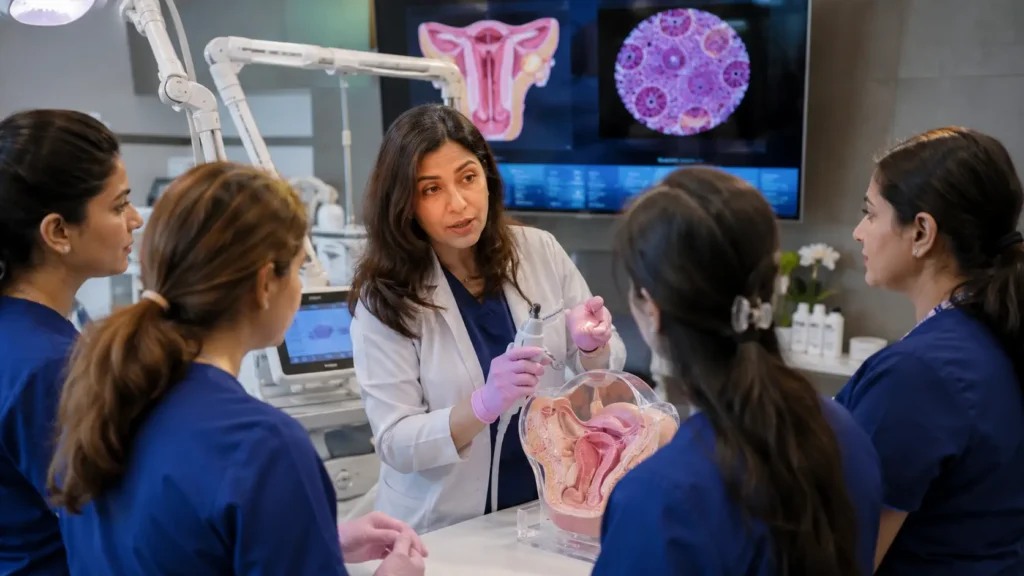
But here is the problem: many training programs today are either “all scalpel” (pure surgery) or “all machine” (pure device training). At MIRAG, we realized early on that to be a truly elite practitioner, you have to bridge that gap. You need to understand the science of how tissues heal before you ever pick up a surgical blade.
Table of Contents
1. The Histology of the “Tight”: Beyond the Surface
In traditional surgery, we were taught to excise excess tissue. But in aesthetic gynaecology, we are often trying to restore the quality of that tissue. Our curriculum starts with the science of neocollagenesis and neoangiogenesis. Before you learn how to perform a vaginoplasty, you need to understand how Energy-Based Devices (EBDs)—like fractional CO2 lasers—actually trigger a healing response at the cellular level. When you know the science of tissue impedance and thermal coagulation, your surgical results become far more predictable.
2. Regenerative Medicine: The New Surgical Assistant
One of the most exciting parts of the MIRAG curriculum is the integration of biologics, specifically Platelet-Rich Plasma (PRP) and Adipose-Derived Stem Cells (ADSCs). We don’t just teach you how to inject; we teach you the “paracrine” science—how these growth factors communicate with dormant follicles and damaged vaginal epithelium to promote functional recovery. Whether you are treating Lichen Sclerosus or Postpartum Laxity, combining surgery with regenerative science is what gives your patients long-term results rather than a temporary “fix.”
3. Data-Driven Decision Making
A surgeon who doesn’t look at the data is just a technician. Our training emphasizes Evidence-Based Practice. We dive into validated tools like the Female Sexual Function Index (FSFI) and Visual Health Indices (VHI). Why? Because the “science” of a successful outcome isn’t just what you see on the table; it’s the measurable improvement in the patient’s quality of life six months later. We teach you how to analyze these clinical markers so you can scientifically justify every procedure you recommend.
4. Navigating the “Anatomical Lifecycle”
Surgery is static; science is dynamic. A woman’s anatomy changes from her 20s through menopause. A “one-size-fits-all” labiaplasty technique is a recipe for disaster. Our curriculum bridges the gap by teaching the hormonal science behind these changes. Understanding the decline in dehydroepiandrosterone (DHEA) and its effect on epithelial renewal allows you to customize your surgical approach for a 25-year-old versus a 55-year-old patient.
The MIRAG Difference
The goal isn’t just to make you a “Cosmetic Gynecologist.” The goal is to make you a Functional Regenerative Expert. By anchoring every surgical move in biological science, we ensure that you aren’t just changing how a patient looks—you are fundamentally restoring how her body functions.
References & Credible Sources
- TECH United States (2026). Master’s Degree in Aesthetic Gynecology Curriculum: Integration of laser techniques, PRP, and sexual health assessment.
- PMC / National Center for Biotechnology Information (2025). Diode Laser and Radiofrequency for Genitourinary Syndrome of Menopause: A Comparative Analysis. [On FSFI and VHI score improvements].
- Urology Times (2024/2026 Update). Laser and radiofrequency vaginal rejuvenation procedures: Safety and effectiveness literature review.
- PMC / ResearchGate (2025). Clinical practice perspectives on adipose-derived stem cells (ADSCs) and platelet-rich plasma (PRP) for female reproductive treatments.
- MDPI – Cosmetics Journal (2025). Aesthetic Gynecology and Mental Health: Impact of physiological transitions and aging on vulvovaginal health.
- ResearchGate (2024). Vaginal Rejuvenation: A Retrospective Review of Lasers and Radiofrequency Devices. [On neocollagenesis and tissue impedance].
- International Society of Aesthetic Plastic Surgery (ISAPS) (2024). Global Survey on Aesthetic Procedures: Growth of non-surgical vs. surgical interventions.
- PMC / PubMed (2022/2025). The efficacy and safety of combined multipolar radiofrequency with pulsed electromagnetic field technology for vaginal laxity.
- Future Science OA (2025). Regenerative potential of ADSCs and PRP in overcoming infertility and tissue injury.
- Alma Lasers / InMode Clinical Briefs (2025). Aparatology and energy delivery in modern gyneco-aesthetics.
- ClinicalTrials.gov (2026). NCT06691178: Study on Histological Vaginal Changes After CO2 Laser Treatment.
- MasterHealthPro (2026). Recent Developments in Cosmetic Gynaecology: Understanding the science of EBDs.
- PMC / Clinical Implications (2026). Perception of aesthetic procedures: The need for structured discussions in educational curricula.
- ResearchGate (2025). Aesthetic Gynaecology: What Women Want? Addressing functionality and reproductive health through innovation.