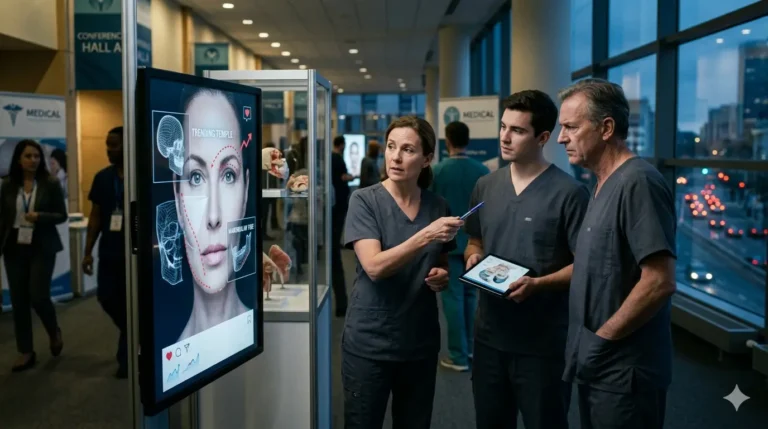
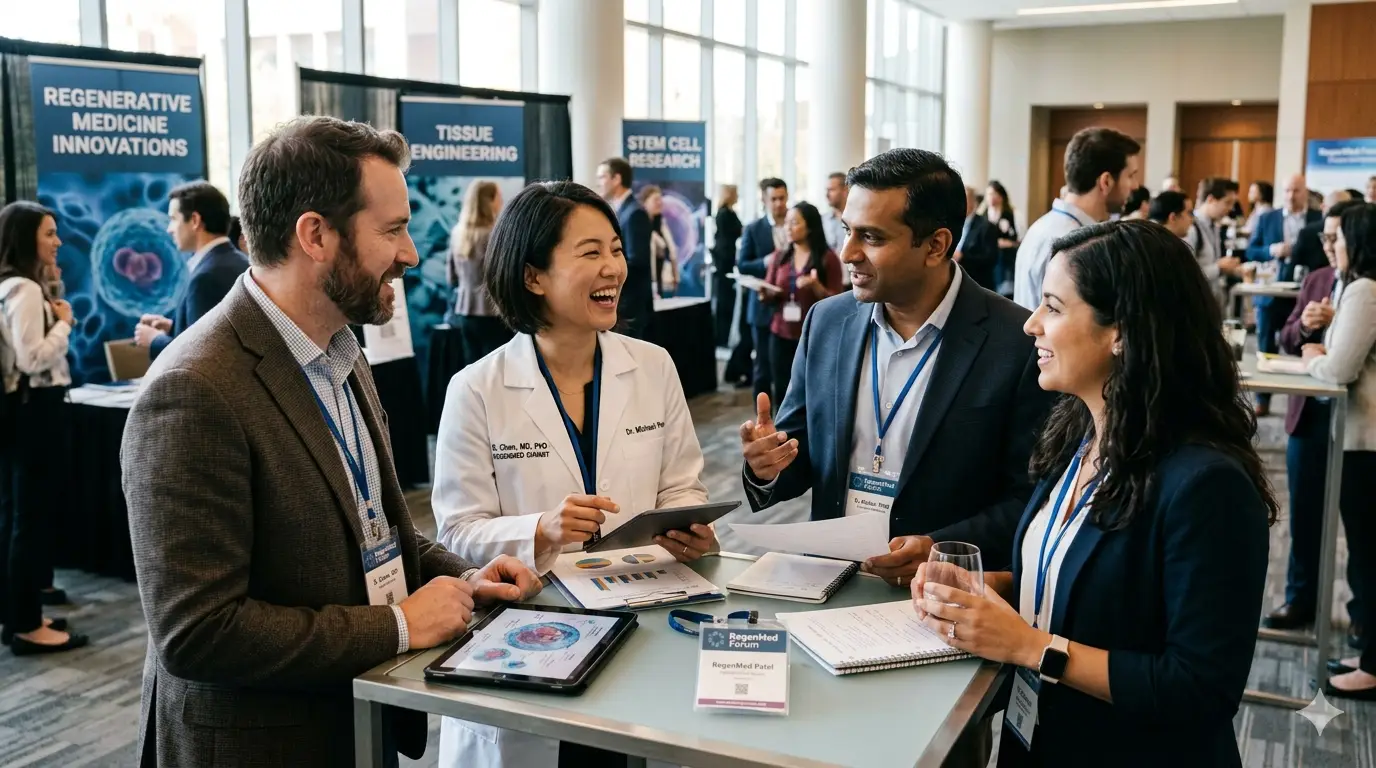

When we think about advancing our skills in cosmetic and regenerative gynaecology, our minds usually go straight to the latest CO2 laser or the newest protocol for Platelet-Rich Plasma (PRP) preparation. We focus on the “what” and the “how.” But in my years of practicing and teaching at MIRAG, I’ve realized there’s a third element that is just as critical for clinical success: the “who.”
Regenerative medicine isn’t like traditional surgery where the “gold standards” were set forty years ago. This field is moving at lightning speed. If you are practicing in a silo, you are essentially practicing with one hand tied behind your back. Here is why peer-to-peer networking is no longer just a “nice-to-have” social activity—it is a clinical necessity.
Table of Contents
1. The “Validation Effect” for New Therapies
Clinical trials give us the scientific foundation, but peer recommendations provide the “real-world” validation. When you’re part of a high-level network like the one we foster at MIRAG, you aren’t just reading a brochure about a new energy-based device; you are talking to a colleague who used it yesterday on a complex case of Lichen Sclerosus.
This “informal validation” is how treatments actually gain traction. When several trusted peers report success with a specific regenerative approach, adoption accelerates safely. Conversely, a quick heads-up from a peer about a specific complication can save you—and your patient—from a significant headache.
2. Solving the “N=1” Problem
In general gynaecology, we have thousands of cases to look back on. In specialized regenerative medicine, you will often face “N=1” situations—patients with unique anatomical variations or rare hormonal profiles where the textbook doesn’t have the answer.
A peer network acts as an immediate, global “second opinion” engine. Digital platforms and specialty forums allow us to share de-identified case challenges and get instant feedback from those who have faced similar hurdles. This collective intelligence ensures that even when you are the only specialist in your city, you are never truly practicing alone.
3. Bridging the “Confidence Gap”
Let’s be honest: transitioning into aesthetic gynaecology can be intimidating. There is a documented “confidence gap” when surgeons move into new, highly specialized niches.
Peer-to-peer mentorship is the antidote. Seeing a colleague—someone at the same career stage as you—successfully navigate a complex labiaplasty or launch a regenerative clinic gives you the psychological “green light” to do the same. At MIRAG, we don’t just teach you the surgery; we plug you into a community that supports your professional growth and holds you accountable to ethical excellence.
4. Accelerating the Learning Curve
Recent data shows that physicians connected to “early adopters” of innovative therapies are significantly more likely to master those treatments successfully. By engaging in collaborative learning, you don’t just learn from your own mistakes; you learn from everyone else’s, too. This “Master Trainer” model is how we ensure that the next generation of gynaecologists is equipped to handle the rapid momentum of 2026 and beyond.
The Bottom Line
Your fellowship certificate gets you into the room, but your network keeps you at the top of your game. Regenerative medicine is a team sport. Whether it’s a quick WhatsApp message to a mentor or a deep-dive discussion at a MIRAG alumni meet, these connections are what transform a “good” practitioner into a “master” specialist.
References & Credible Sources
- NeurologyLive / MDA 2026 Conference Report. (March 2026). The Spirit of Partnership: Cross-sector collaboration in emerging therapies.
- Amrita Vishwa Vidyapeetham Research. (February 2026). Scaling Impact through the Master Trainer and Peer-Led Outreach Model.
- eHealthcare Solutions. (March 2026). The Physician Network Effect: How Medical Communities Shape Treatment Adoption and Validation.
- Formedics / HCP Collaboration Study. (March 2025). The Power of Peer-to-Peer Collaboration in Modern Medical Practice.
- ResearchGate / Scoping Review. (November 2025). The Impact of Peer Support on Health Outcomes and Information Consolidation.
- MDPI – International Journal of Environmental Research. (2022/2026 Update). Exploring the Peer Effect: Evidence from Online Physician Communities and Knowledge Sharing.
- American Medical Women’s Association (AMWA). (June 2025). The Structural Intervention of Mentorship in Reducing Clinical Gaps.
- ResearchGate / OB-GYN Resident Study. (2024). Attributes Valued in Mentorship: Integrity and Professional Society Alignment.
- Stanford Medicine / Faculty Development. (2025). Building Meaningful Partnerships through Individualized Mentorship and Peer Coaching.
- Conceptual OBG / Career Building. (September 2024/2025). The Crucial Role of Mentorship in Shaping Successful Specialized Careers.
- Whitehead Institute. (March 2026). The Power of Multidisciplinary Science and Foundational Research in Therapeutics
- ResearchGate / Stem Cells in Aesthetics. (2022/2026 Update). Regenerative Medicine in Gynecology: The need for community-driven long-term evidence.